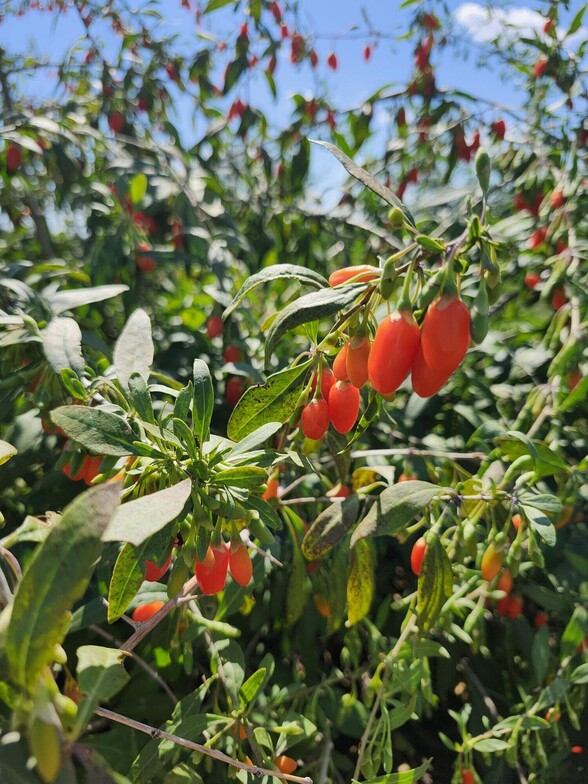

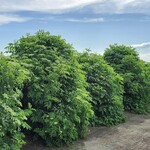
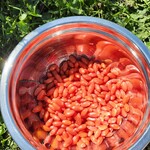
Fall always feels like a turning point in the herb garden. After months of tending, watering, watching, and waiting, it becomes a season of gathering—of finally bringing in the plants you’ve nurtured since spring. This year has been especially challenging with the weather presenting its own unique challenges. The plants needed extra care, but this hardiness produces some of the best medicine. Long stretches spent harvesting goji berries and elderberries this fall was so rewarding. Both are generous plants in their own way, and there’s something deeply satisfying about collecting their bright, nutrient‑rich fruits after investing so much care throughout the growing season. It’s the kind of work that leaves your hands busy, your baskets full, and your heart grounded in the rhythm of the garden.
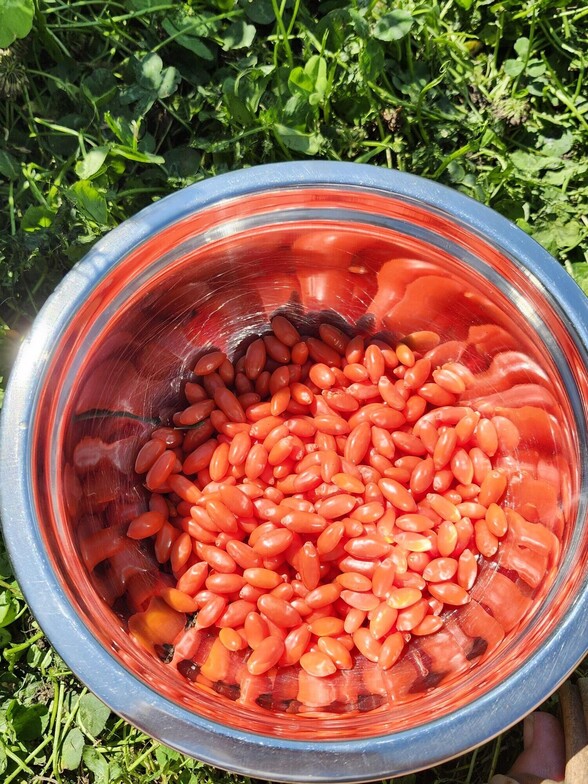
Goji berries are picked at their peak of ripeness, when they turn that beautiful orange-red color and are plump and full of juice. Then they are quickly washed and frozen for winter use. Goji berries can be enjoyed in smoothies, yogurt, porridge, soups, stews or baked goods. Goji berries—Gou Qi Zi (枸杞子)—hold an important place in Traditional Chinese Medicine (TCM), where they have been used for more than two millennia. In TCM, goji berries are classified as a sweet, neutral, yin‑tonifying herb that enters the Liver, Kidney, and Lung channels. Their primary traditional functions include nourishing Liver and Kidney yin, building blood, supporting essence (jing), and brightening the eyes. These uses are deeply rooted in classical texts such as the Shennong Bencao Jing, where goji is listed among the “superior” herbs considered safe for long‑term use.
Goji berries are especially valued for eye health—TCM associates the Liver and Kidney with vision—and modern research aligns with this, noting high levels of zeaxanthin, lutein, and Lycium barbarum polysaccharides (LBP) that support macular pigment density and antioxidant activity. Their neutral energetic nature makes them unusually versatile: they nourish deeply without creating excess heat or cold, making them suitable for many constitutions when used appropriately.
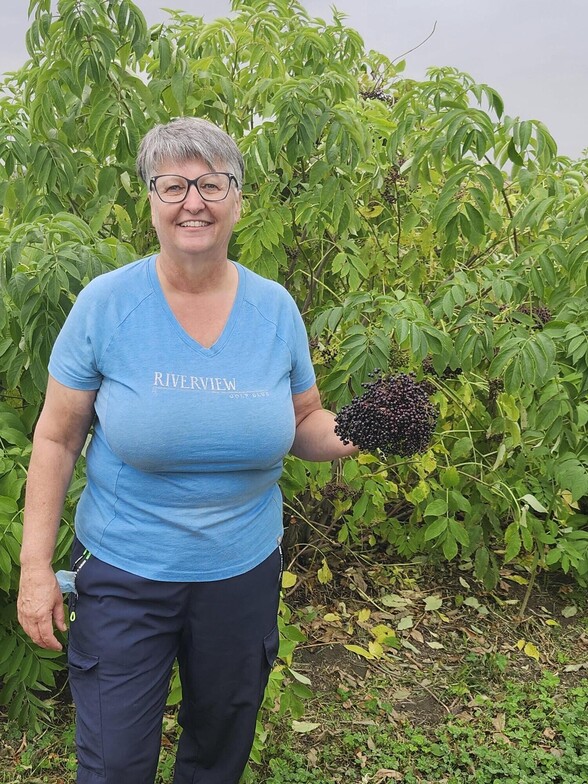
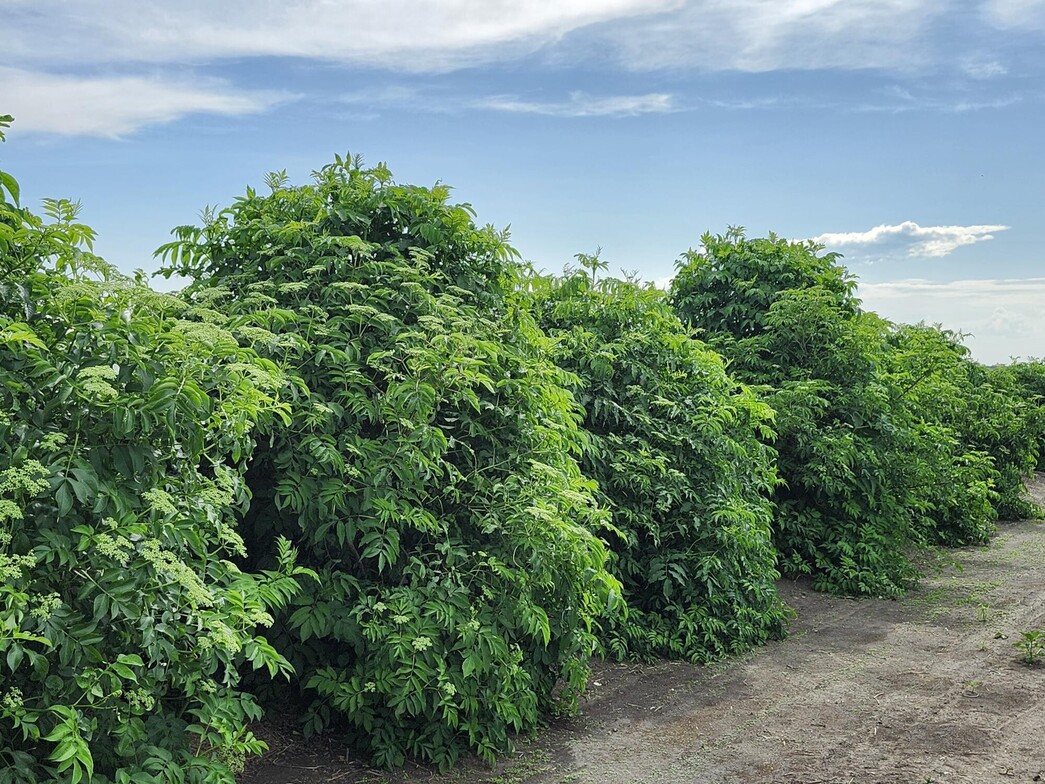
As kids head back to school, elderberry harvest begins. It is amazing to watch these beautiful flower heads in the summer turn to a deep purple-black berry in fall. Because elderberry has a low spoilage threshold, it is important to process them quickly after harvest. First, the berries are checked to see if they have achieved peak ripeness, then the umbles are cut from the tree, placed into buckets, destemmed, washed and finally dehydrated for winter storage. The elderberries from my herb garden are then turned into delicious elderberry syrup for the upcoming cold and flu season.
Elderberry is one of the most prized fruit in an herbalists apothecary. Elderberry’s medicinal value centers on immune support, antiviral activity, anti‑inflammatory effects, and nutrient density, largely due to its anthocyanins, polyphenols, and vitamin C. It is one of the most historically important berries in Western herbal medicine.

Lorie Schell
Contact Me